
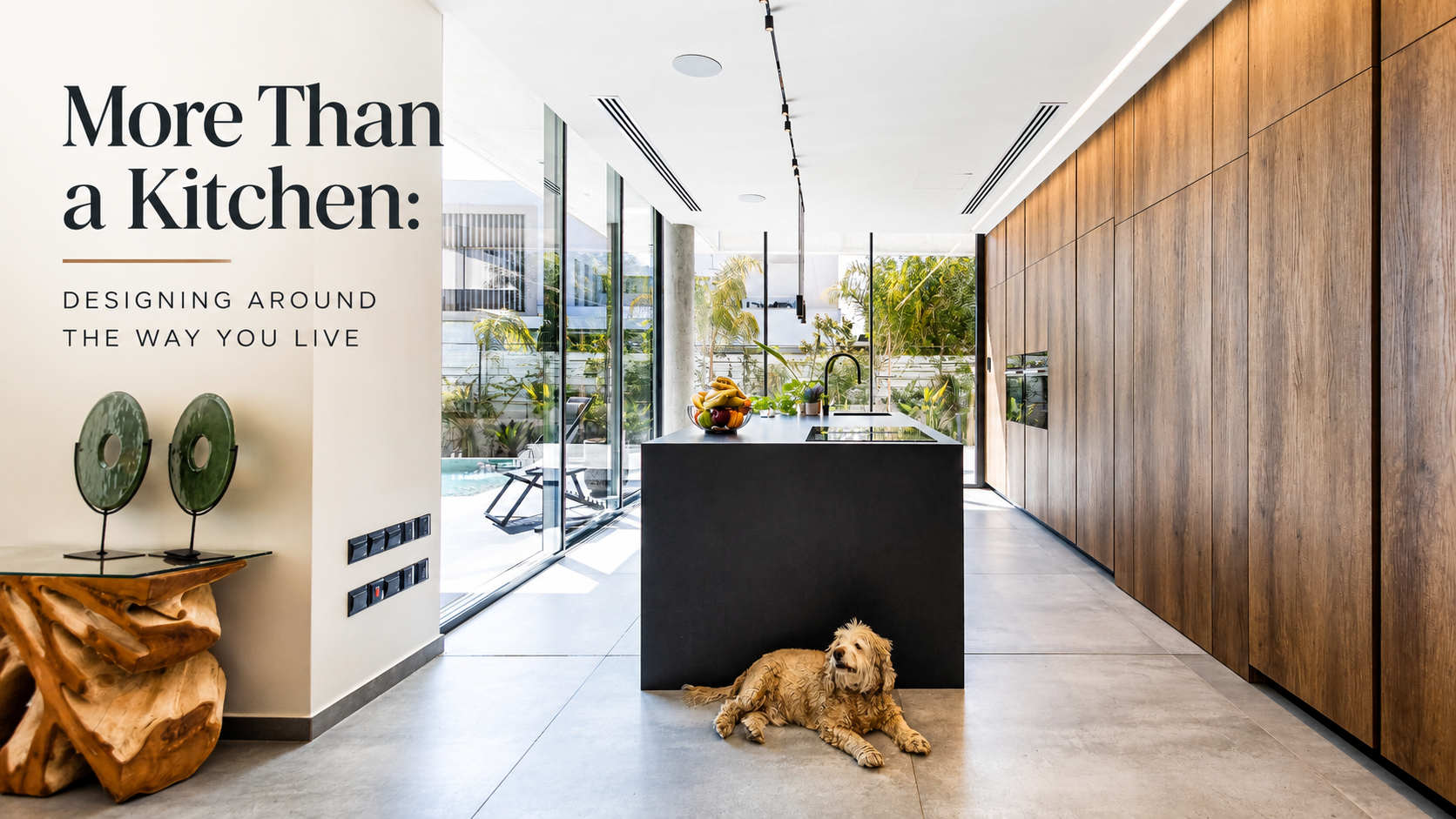
A kitchen should never begin with a catalogue.
It should begin with a conversation.
How do you start your day? Do you cook every evening or only on weekends? Is the kitchen a place for family gatherings, a quiet morning coffee, entertaining friends, or all of the above?
At OCRIAM, we believe that good kitchen design is not simply about choosing colours, materials and finishes. It is about understanding how a space needs to work for the people who will live in it.
Design Begins with Everyday Life
No two homes function in exactly the same way.
A family with young children has different needs from a couple who loves to entertain. A compact apartment requires a different approach from a large open-plan residence. Storage habits, movement, natural light and even the way someone prepares a meal can influence the final design.
This is why thoughtful kitchen design goes beyond appearance.
Every decision — from the position of a cabinet to the height of a worktop and the organisation of storage — should contribute to a more comfortable and effortless everyday experience.
Creating Flow, Not Just Furniture
A well-designed kitchen feels natural.
Movement between preparation, cooking, washing and storage areas should be intuitive. Frequently used items should be easily accessible. Work surfaces should support the way the kitchen is actually used.
When these elements are carefully considered, the kitchen becomes more than a collection of cabinets and appliances.
It becomes a space with flow.
Personalisation Is in the Details
True personalisation is often found in the smallest decisions.
The internal organisation of a drawer. A storage solution designed around specific needs. The combination of textures and finishes. The way lighting interacts with materials throughout the day.
These details may not always be immediately visible, but they define how a kitchen feels and functions over time.
A Kitchen Designed for You
Since 1987, OCRIAM has approached kitchen design with one fundamental belief: the space should adapt to the people who live in it — not the other way around.
Because the best kitchens are not simply designed to be seen.
They are designed to be lived in.